Used Model 3 and EV6 Inspection Checklist: Battery Health and Recalls
A healthy used Model 3 keeps about 93–95% of its range after three to five years. Every 2022–2024 EV6 needs its ICCU recall checked. Here is what normal battery health looks like by mileage, the recalls and warranties to verify by VIN, and a printable test-drive checklist.
Open this on your phone before you go see the car. It is a field guide: the benchmarks first, so you know what “normal” looks like, then a checklist in the order you will actually use it at the lot.
Both cars can be excellent used buys. Nearly all the risk sits in three checks:
- Battery health. A normal Model 3 keeps about 95% of its range at 3 years and 93% at 5 (Recurrent owner data). Well below that is a negotiation point or a reason to walk.
- Open recalls. Every 2022–2024 Kia EV6 should have the ICCU recall (Kia SC327 / NHTSA 24V867) completed. Run any VIN at nhtsa.gov/recalls.
- Charging. Prove the car charges on Level 2 and a DC fast charger before you buy. A failed charging unit is the most expensive surprise on either car.
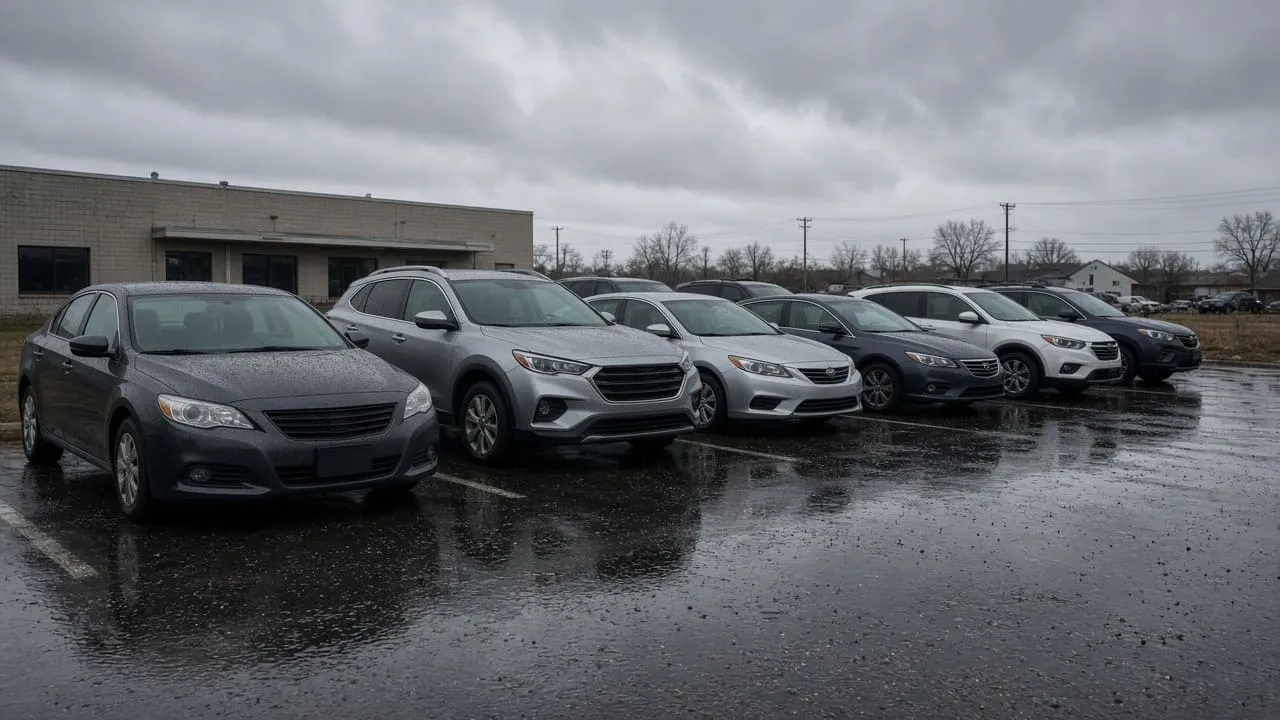
Illustration (AI-generated). Inspect the specific VIN, not the model’s reputation.
What normal battery health looks like
Tesla Model 3
| Data point | Battery health / range retained | Source |
|---|---|---|
| ~3 years old | ~95% | Recurrent owner data |
| ~5 years old | ~93% | Recurrent owner data |
| Early Standard Range Plus RWD, ~68,000 mi | ~79% average | Tesla CPO listings (51 cars) |
| Early Long Range AWD, ~69,000 mi | ~83% average | Tesla CPO listings (87 cars) |
| 2024+ “Highland” RWD, ~30,000 mi | ~90.5% average | Tesla CPO listings (534 cars) |
Tesla CPO figures compare the range Tesla reports today with the original rated range, as compiled by EV-Inventory in September 2026.
Two things to know:
- Early loss is normal. Batteries typically lose a few percent in the first 10,000–20,000 miles, then degrade slowly, roughly 1–2% a year across Recurrent’s fleet.
- The warranty floor is 70%. Tesla covers the Model 3 battery for 8 years and 100,000 miles (120,000 on Long Range and Performance), and replaces it if capacity falls below 70% inside that window. The remaining warranty transfers to you.
How to check it: recent Tesla software includes a battery health test in the car’s Service menu. Ask the seller to run it, or ask for a third-party battery report. At minimum, charge to 100% (or check the projected full range) and compare it with the original EPA range for that exact trim and year.
Kia EV6
Kia does not publish a battery health number on the dash. Options:
- An OBD-II reader plus a phone app that reads state of health (SOH)
- A battery report from a Kia dealer during the pre-purchase inspection
- A full charge range estimate compared with the original EPA rating, remembering that cold weather and recent driving style affect the estimate
Recalls and warranties to verify by VIN
| Check | Model 3 | Kia EV6 |
|---|---|---|
| Open recalls | Run VIN at NHTSA. Most Tesla recalls are fixed over the air, but confirm. | Run VIN at NHTSA. ICCU recall SC327 / 24V867 on 2022–2024 models: inspect and replace the ICCU and fuse if needed, plus a software update. |
| Battery / EV system warranty | 8 years, 100k mi (Standard) or 120k mi (Long Range/Performance), 70% threshold. Transfers. | 10 years / 100k mi for the original owner. Later owners may get shorter coverage, so ask a Kia dealer to confirm what remains on this VIN. |
| Special coverage | — | ICCU warranty extension (WTY044): AC charging and Vehicle-to-Load failures caused by the ICCU covered for 15 years / 180,000 miles from first service, for all owners. |
| Known issues to ask about | Early cars: panel gaps, paint, door handles, 12V battery. Front suspension clunks on some older cars. | ICCU failure (12V battery drains, “Check electric vehicle system” warning, AC charging stops). |
The ICCU (integrated charging control unit) manages AC charging and keeps the 12-volt battery charged. When it fails, the car can lose drive power, which is why the recall matters even if the current owner has not had a problem.

Illustration (AI-generated). A pre-purchase scan beats phone photos.
Model 3 vs EV6 as a used buy
| Tesla Model 3 | Kia EV6 | |
|---|---|---|
| Efficiency (EPA) | About 24–26 kWh/100 mi (current RWD and AWD) | About 29 kWh/100 mi (115 MPGe) |
| Charging port | NACS (Tesla) | CCS. NACS adapter needed for Superchargers. |
| DC fast charging | Supercharger network, Tesla member pricing | Very fast 800-volt charging on capable stations |
| Body style | Sedan, smaller trunk | Crossover hatch, more cargo flexibility |
| Battery chemistry note | Standard Range from about 2021 often uses LFP (fine to charge to 100% daily). Long Range uses NCA (keep daily charging at 80–90%). | Daily charging to 80% is typical. |
Efficiency matters if you will use public charging. At the October 2026 US average of $0.55/kWh, the difference between 25 and 29 kWh/100 mi is about $22 a month for 1,000 miles.
The checklist, in the order you’ll use it
At home, before you go (20 minutes)
- Title is clean (no salvage, rebuilt, flood, or lemon brand) and matches the VIN on the car
- Vehicle history report checked for accidents, odometer issues, and how many owners
- NHTSA recall lookup shows no open recalls, or the dealer will complete them before sale
- Service records, including any battery, ICCU, or high-voltage repairs
- Remaining warranty confirmed with Tesla or a Kia dealer for this VIN
- For Tesla: paid software features (such as Full Self-Driving) confirmed on Tesla’s records, not just the seller’s word
At the car: battery and charging (30 minutes)
- Battery health report or 100% range estimate compared with the original EPA range
- Level 2 AC charging test for at least 10 minutes. Critical on the EV6 because of the ICCU.
- DC fast charging test if a station is nearby. Watch that power ramps up normally.
- Charge port door, latch, and cable lock work
- No high-voltage or “Check electric vehicle system” warnings
- Mobile connector or charging cable included, if the listing says so
At the car: body and chassis (10 minutes)
- Panel gaps and paint consistent; signs of repainting checked
- Underbody checked for impact damage to the battery pack enclosure
- Tires: tread depth and even wear. EVs are heavy, and uneven wear can point to alignment or suspension issues.
- No clunks over bumps, and no pulling under hard braking or acceleration
Inside: cabin and tech (10 minutes)
- Touchscreen, all cameras, and driver-assist features work
- Heat and A/C work, including the heat pump if equipped
- All door handles, windows, and the trunk work
- Phone key and key cards (Tesla) or smart keys (Kia) handed over and paired to you
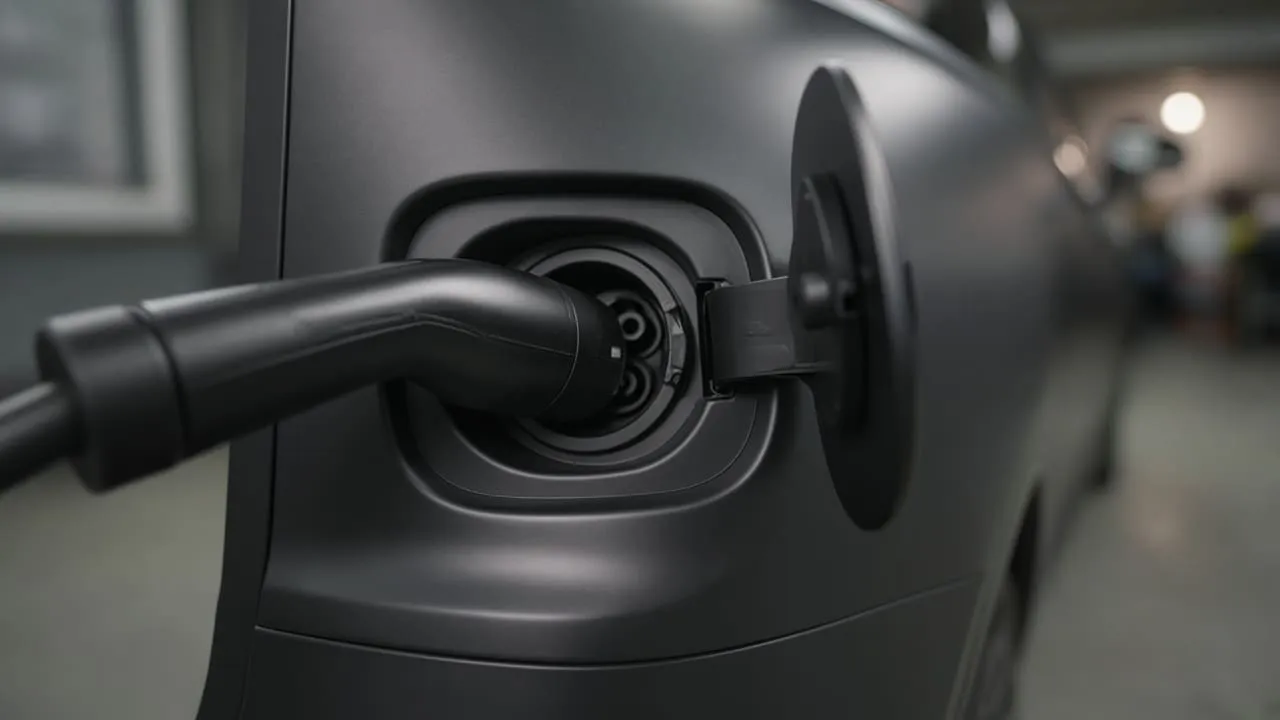
Illustration (AI-generated). Prove AC charging works before celebrating a low price.
Walk away, or renegotiate hard, if you see
- Battery health far below the benchmarks above for its age and miles
- An EV6 with an unfinished ICCU recall that the seller refuses to complete
- Any high-voltage warning, or a car that will not AC charge on the test drive
- Salvage or rebuilt title. EV battery damage can be hidden, and some insurers will not fully cover these cars.
- A seller who will not allow a pre-purchase inspection
It passed. Before you sign
- Get an insurance quote for the exact VIN. EV insurance averages more than gas cars, and Teslas can be among the more expensive to insure.
- Check whether your state offers a used EV rebate. Illinois, for example, offers $2,000–$4,000 on used EVs from Illinois dealers. See state EV incentives.
- Sort out home charging before the car arrives. See Level 2 installation cost or apartment EV charging.
Where the benchmarks come from
- Model 3 range retention at 3 and 5 years: Recurrent owner data, plus Recurrent’s battery lifespan research.
- Tesla CPO battery health by version: EV-Inventory, September 2026, compiled from Tesla’s own certified pre-owned listings.
- EV6 ICCU recall: NHTSA owner notice 24V867. Warranty extension WTY044: Kia owner letter, April 2026.
- Efficiency: FuelEconomy.gov 2026 Tesla ratings.
- Recall lookup for any VIN: nhtsa.gov/recalls.
Checked October 2026. Warranty terms vary by model year and region; confirm coverage for the specific VIN.
FAQ
How much battery degradation is normal on a used Tesla Model 3?
Recurrent's owner data shows a Model 3 keeps about 95% of its original range after three years and 93% after five, with most loss in the first 10,000–20,000 miles. Tesla's own certified pre-owned listings show early Standard Range Plus cars averaging about 79% battery health and early Long Range AWD cars about 83% at roughly 68,000–69,000 miles. A car well below those numbers deserves a closer look.
What should I check on a used Kia EV6?
Run the VIN through NHTSA's recall lookup and confirm the ICCU recall (Kia SC327, NHTSA 24V867) has been completed on 2022–2024 models. Kia also extended ICCU-related AC charging and Vehicle-to-Load coverage to 15 years or 180,000 miles for all owners. On the test drive, confirm it charges on a Level 2 charger and shows no 'Check electric vehicle system' warning.
Does the battery warranty transfer to a used EV buyer?
Tesla's Model 3 battery warranty (8 years and 100,000 or 120,000 miles depending on trim, 70% capacity threshold) transfers to later owners. Kia's 10-year/100,000-mile EV coverage is aimed at the original owner, and later owners may get shorter coverage, so ask a Kia dealer to confirm what remains for the specific VIN. The EV6 ICCU extension applies to all owners.
Do I need a pre-purchase inspection for a used EV?
Yes. Pay for an inspection at a shop that works on EVs, or at a brand service center. It should include a battery health report, a scan for stored fault codes, suspension and tire wear, and evidence of prior collision repair. It usually costs a few hundred dollars, which is cheap insurance on a $20,000+ purchase.