Level 2 Charger Installation Cost (2026): What Most US Homes Pay
Most US homes pay $1,200–$2,500 all-in for a Level 2 charger, including hardware, labor, and permit. A panel upgrade adds $1,500–$3,500. Here is the line-by-line breakdown, the cheaper 240V outlet route, and how to tell if you need Level 2 at all.
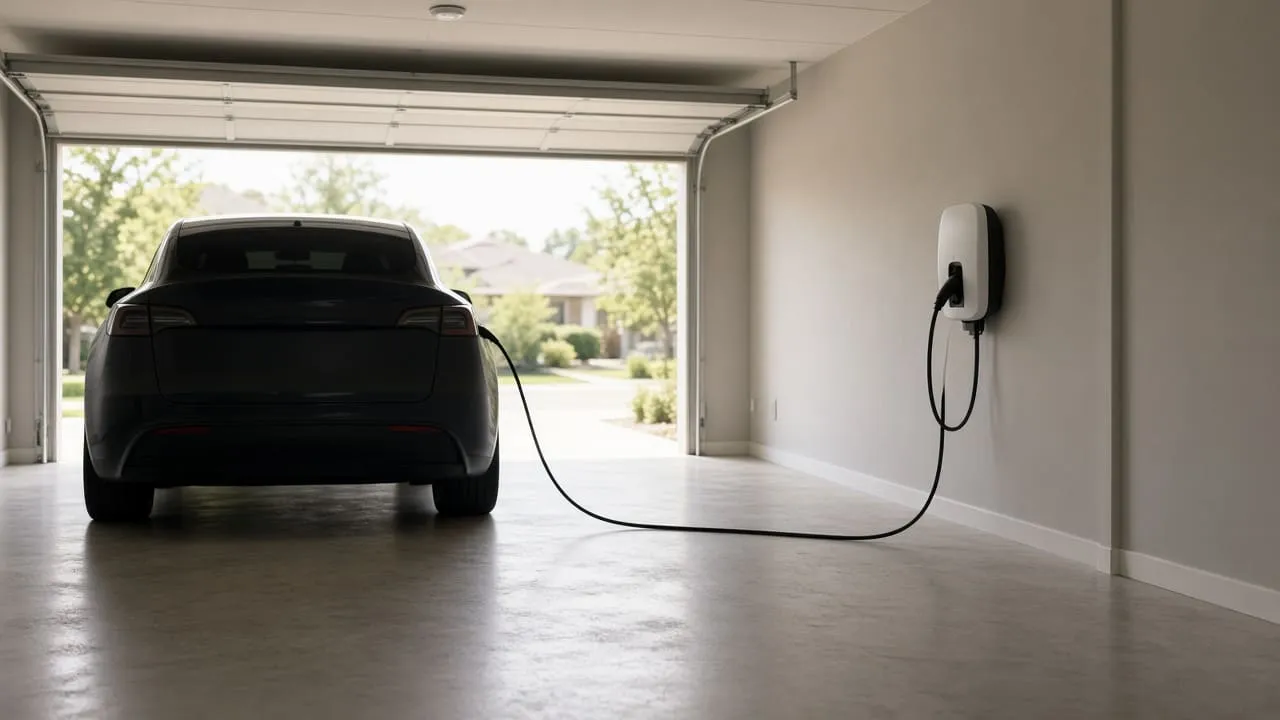
If you are holding an electrician’s quote and wondering whether it is fair, here is the benchmark: most US homes pay $1,200–$2,500 to install a Level 2 charger in 2026, all-in. That covers the charger, an electrician, materials, and a permit. A short run in a garage next to the panel can land under $1,000. A panel upgrade or a trench to a detached garage can push the total past $4,000.
Two things changed this year:
- The federal home-charger credit is gone. The 30C credit no longer applies to chargers placed in service after June 30, 2026.
- Gas is expensive. The AAA national average hit $4.37/gal on October 5, 2026, which makes the payback on home charging faster than it was a year ago.
FairRange compiled the ranges below from published 2026 installer cost guides and current electrician pricing (listed in Sources). Your quote will depend on your panel, the wire distance, and your city’s permit fees, so treat these as a sanity check for the quotes you collect, not a replacement for them.
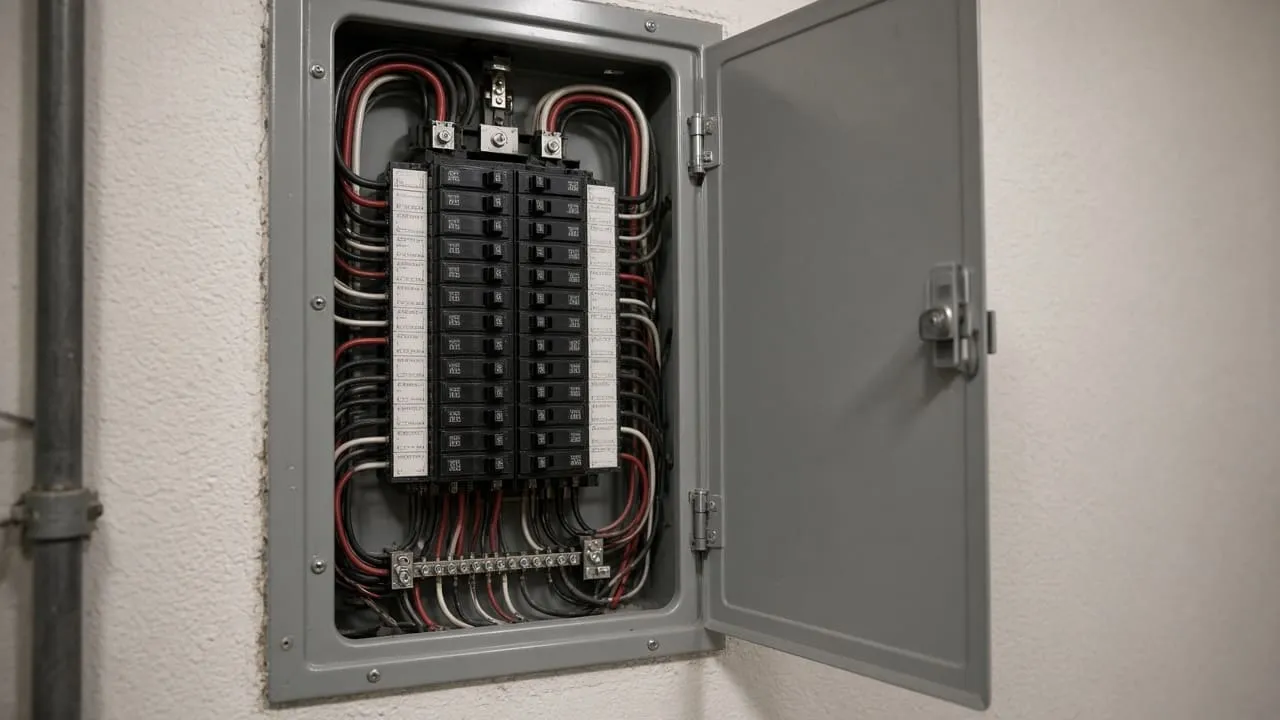
Illustration (AI-generated). Not a product endorsement.
Anatomy of a typical quote
Every quote is built from the same five or six lines. Put yours next to this table, line by line:
| Line item | Typical 2026 range | What moves it |
|---|---|---|
| Level 2 charger (hardware) | $350–$800 | Brand, cable length, Wi-Fi features. A basic 40A unit is enough for most commuters. |
| Labor | $300–$900 | 2–6 hours at $75–$150/hour. Finished walls and long runs add hours. |
| Wire, conduit, breaker | $150–$500 | 6 AWG copper runs about $3–$6 per foot. Runs over 50 feet may need thicker wire. |
| GFCI breaker (if required) | $80–$150 extra | Newer electrical codes require GFCI protection for many 240V garage outlets. |
| Permit and inspection | $75–$250 | Set by your city or county. Required for a new 240V circuit almost everywhere. |
| Typical total, no panel work | $1,200–$2,500 | What most homeowners actually pay. |
| Panel upgrade (only if needed) | +$1,500–$3,500 | 100A to 200A service. The biggest single variable in any quote. |
Cost by scenario
| Your situation | Typical total | Why |
|---|---|---|
| Panel in the garage, charger within 15 feet | $800–$1,500 | Short run, little labor, no wall repair |
| Panel in basement, 20–50 ft run to garage | $1,500–$2,500 | Wire through walls or ceilings, more hours |
| Detached garage or outdoor driveway post | $2,500–$5,000 | Trenching, underground conduit, possibly a subpanel |
| Panel too small for a new 40–50A circuit | $3,000–$6,000 | Service upgrade plus the install above |
The cheaper route: a 240V outlet instead of a hardwired charger
Many commuters skip the wallbox and have an electrician install a NEMA 14-50 outlet (the same plug used at RV parks), then use a portable charger. When the panel is close, that outlet typically costs $300–$800 installed.
Here is what each option actually delivers. The miles-per-hour figures assume a typical compact SUV at 3.3 miles per kWh, the same assumption our calculator uses:
| Setup | Circuit | Max continuous power | Range added per hour | 10-hour overnight |
|---|---|---|---|---|
| Standard wall outlet (Level 1) | 120V / 15A | 1.4 kW | ~4 mi | ~40 mi |
| NEMA 6-20 outlet | 240V / 20A | 3.8 kW | ~11 mi | ~110 mi |
| NEMA 14-30 / 10-30 (dryer outlet) | 240V / 30A | 5.8 kW | ~17 mi | ~170 mi |
| NEMA 14-50 outlet + portable charger | 240V / 50A | 7.7–9.6 kW | ~23–28 mi | 230+ mi |
| Hardwired charger | 240V / 60A | 11.5 kW | ~34 mi* | 300+ mi |
*Only if your car’s onboard charger accepts 11.5 kW. Many EVs cap AC charging between 7.2 and 11 kW, so check the spec before paying for a 60A circuit.
Electrical code limits continuous loads like EV charging to 80% of the circuit rating. That is why a 50A outlet delivers 40A, not 50A.
Hardwired vs outlet, in one line: if the spot is a dedicated EV parking space you will use for years, hardwire it. If you want flexibility (RV, welder, moving the charger to a new home), the 14-50 outlet is a reasonable choice. Ask for an industrial-grade receptacle, because cheap outlets can overheat under hours of continuous load.
Do you even need Level 2?
Before paying $1,200+, check whether a regular outlet already covers you. A 120V outlet adds roughly 40 miles over a 10-hour night. A 30-mile round-trip commute five days a week, plus 50 miles of weekend errands, averages about 29 miles a day. Level 1 covers that with room to spare, as long as you plug in every night.
Level 2 becomes worth it when:
- you drive more than about 35–40 miles on a typical day
- you live somewhere cold, where winter driving and cabin heating use noticeably more energy
- two EVs will share the garage
- you want to charge only during a short off-peak window on a time-of-use rate
Plug your own commute into the EV charging cost calculator. It tells you whether Level 1 refills your typical day overnight, and what charging costs per month.

Illustration (AI-generated). Your panel’s capacity usually decides the price more than the charger brand.
The panel question that decides your quote
Most quote surprises trace back to the electrical panel. Older homes with 100A service that already run an electric range, dryer, and central air may not have room for a new 40–50A circuit.
Ask the electrician for a load calculation (NEC Article 220) before agreeing to a service upgrade. Two alternatives often cost far less than a $1,500–$3,500 upgrade:
- A lower-amp circuit. A 30A circuit (24A charging) still adds about 170 miles overnight, which is more than most commuters need.
- An EV load-management device. These pause charging when the house is drawing heavy power, so the panel never overloads. Ask the electrician to price this next to the upgrade.
What it costs to run
At the June 2026 US average residential rate of 18.3¢/kWh (EIA), driving 1,000 miles a month in a compact electric SUV uses about 340 kWh from the wall. That is roughly $62 a month. A 30-mpg gas car covering the same miles at $4.37/gal spends about $146.
Rates vary widely by state. California averages around 33¢/kWh, while many Southern and Mountain states sit well below the national average. Many utilities offer an EV or time-of-use plan with overnight rates well below average. Call your utility the same week you collect install quotes, because the rate plan can matter as much as the hardware.
Rebates still available in 2026
- Federal: The 30C credit (30% up to $1,000) does not cover chargers placed in service after June 30, 2026. If yours was installed on or before that date in an eligible census tract, ask a tax professional about IRS Form 8911.
- Utility rebates: Many utilities still pay part of the charger or wiring cost, sometimes only if you enroll in an EV rate plan. Search “[your utility] EV charger rebate.”
- State programs: Some states fund charger rebates. For example, New Jersey’s Charge Up program lists up to $250 toward an eligible home charger. Search your state on the AFDC laws and incentives database.
How to get an accurate quote
Send each electrician the same information so the quotes are comparable:
- A photo of your panel with the door open, plus the label showing main breaker size
- The distance from the panel to where you park, and what is in between (finished walls, basement, outdoors)
- The amperage you want (a 40A or 48A charger, or a 14-50 outlet)
- Your car model, so they can match the circuit to its onboard charger
Then compare written quotes that each include permit, inspection, breaker type (GFCI or not), wire gauge, and who buys the charger. Get at least two. Walk away from anyone who offers a lower price for skipping the permit, because unpermitted 240V work can create insurance and home-sale problems later.
If two quotes differ by more than $1,000, the gap is almost always the panel line. Ask each electrician to show the load calculation behind it.
Renting or living in a condo? Start with our apartment EV charging guide. If your employer offers charging, read workplace EV charging before sizing a home circuit, since it may let you install less.
Where these prices come from
The cost ranges combine two published 2026 installer guides, InstallerEV’s line-item breakdown and The Garage Guide’s NEMA 14-50 pricing, checked against current electrician hourly rates. The electricity cost uses the EIA’s June 2026 average residential rate. Credit and rebate rules come from the IRS 30C page and the Charge Up New Jersey guidebook. For general home-charging background, see the AFDC home charging page.
Prices checked October 2026. Not legal, tax, or electrical advice. Electrical work requires a licensed electrician and local permits.
FAQ
How much does it cost to install a Level 2 charger at home in 2026?
Most homes pay $1,200–$2,500 all-in, including a $350–$800 charger, $500–$900 of labor and materials, and a $75–$250 permit. A simple garage job next to the panel can come in under $1,000. If the panel needs a 100A-to-200A service upgrade, add $1,500–$3,500.
Is a NEMA 14-50 outlet cheaper than a hardwired charger?
Usually by a little. A 14-50 outlet on a new 50A circuit typically costs $300–$800 installed when the panel is close, and you then plug in a portable charger. Hardwiring costs about the same in labor but lets the charger run at 48A on a 60A circuit and avoids outlet wear. For a dedicated EV parking spot, hardwired is usually the better long-term choice.
Is there still a federal tax credit for home EV chargers?
No, not for new installs. The federal 30C credit (30% up to $1,000) does not apply to chargers placed in service after June 30, 2026. Some utilities and states still offer rebates, for example New Jersey's Charge Up program lists up to $250 toward a home charger. Check your utility's website before you buy hardware.
Do I actually need Level 2, or is a regular outlet enough?
A standard 120V outlet adds roughly 4 miles of range per hour, or about 40 miles over a 10-hour night. If your daily driving is under about 35 miles and you can plug in every night, Level 1 can be enough. Run your numbers in the FairRange EV charging cost calculator before paying for a 240V circuit.