Chinese EV Resale and Policy Risk for US Buyers
Tariffs, connected-vehicle rules, and brand familiarity decide exit prices more than brochure range. A commute-first risk checklist.

Who this guide is for
US city buyers shopping Chinese-brand EVs online often start with range and price. FairRange starts with exit.
This guide is for commuters who might hold a car 3鈥? years and care whether the next buyer, lender, or insurer will touch it. It is not a day-trading guide for auction flippers.
Title, insurance, and compliance paperwork dominate gray-market EV outcomes. Photo: Unsplash (illustrative).
Why resale is a policy problem
Resale for any EV is messy (incentive cliffs, battery narratives, used supply waves). For China-origin passenger EVs that are not in mainstream US retail, add:
- trade policy that can erase sticker advantages at the border
- connected-vehicle software/hardware rules that affect lawful import/sale paths
- certification status that scares lenders and insurers
- brand familiarity that shapes who shows up at a private sale
As of 30 Aug 2026, major Chinese passenger brands (for example BYD consumer cars) are still widely reported as not sold through normal US retail, even as Canada explores different tariff/access experiments.
Specs that market vs risks that price the exit
What marketing sells
- Overseas MSRP screenshots
- WLTP range banners
- 鈥淕lobal volume leader鈥?vibes
What sets US resale
- Can a normal insurer quote it?
- Can a normal buyer get a loan?
- Are crash parts available in weeks, not seasons?
- Is the title story clean under NHTSA/CBP expectations?
If those fail, brochure efficiency is a distraction.
The tariff stack (how value disappears)
USTR鈥檚 Section 301 four-year review modifications directed additional duties on electric vehicles to 100%, with the 2024 EV increases applicable to covered goods entered for consumption on or after 27 Sep 2024 (see USTR Federal Register notice PDF). Ordinary customs treatment and other measures can still apply depending on classification and stacking 鈥?treat 100% as the headline Section 301 EV layer practitioners cite, not as a DIY customs opinion.
Practitioner landed-cost sketches for a China-built Seal-class car into the US routinely show overseas 鈥渃heap vs Tesla鈥?math collapsing once duties, freight, and compliance are included.
You do not need to memorize every HTS code. You need this intuition:
A viral European price is not a US transaction price 鈥?and it is not a US exit price.
Canada鈥檚 2026 tariff adjustments (USA Today / Electrek reporting) may change Canadian access math. They do not automatically create US auction demand or US title ease.
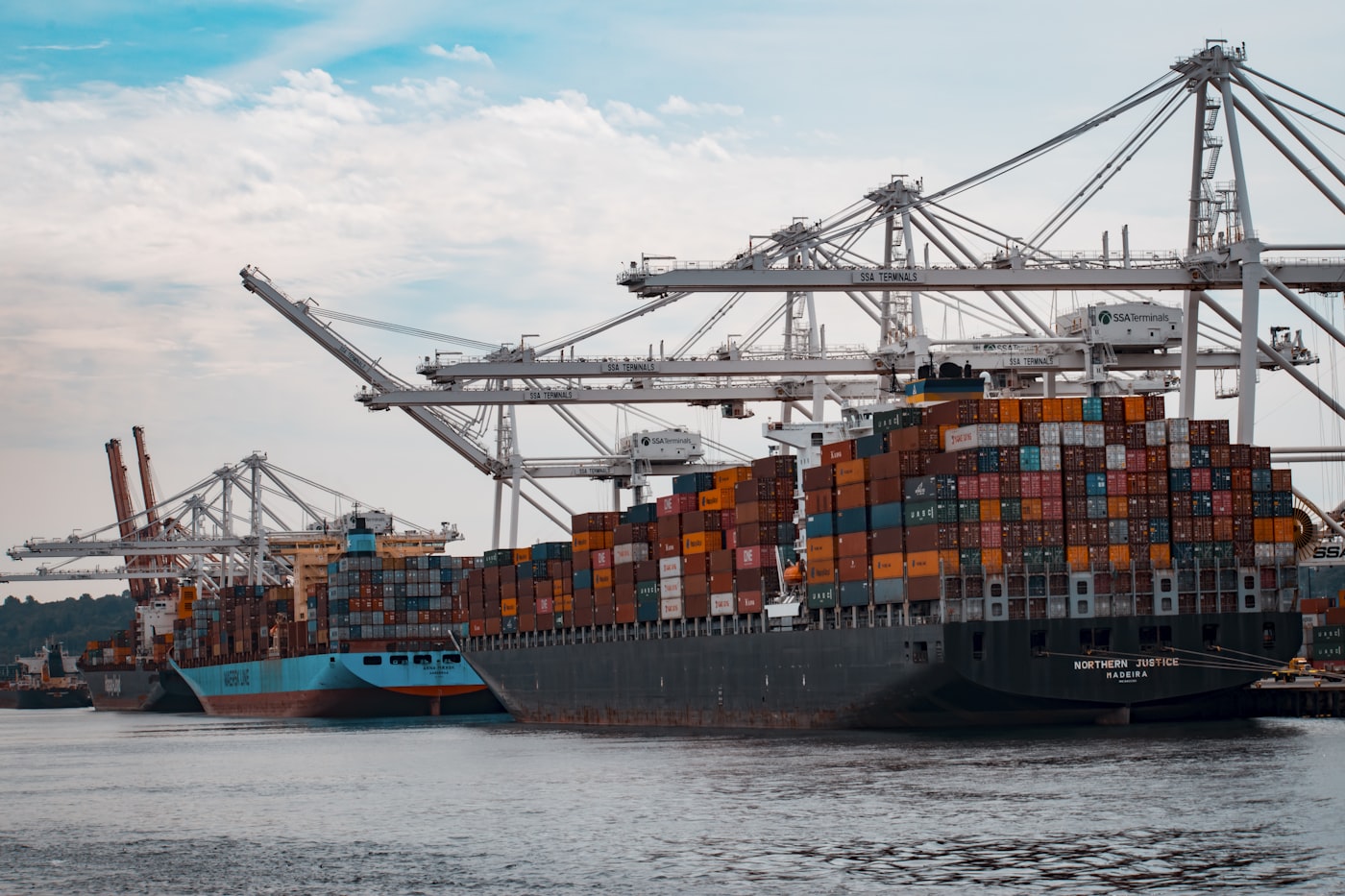
Import economics 鈥?duties, freight, compliance 鈥?often matter more than overseas MSRP screenshots. Photo: Unsplash (illustrative).
Connected-vehicle rules (second gate)
Separately from tariffs, the Department of Commerce鈥檚 Bureau of Industry and Security (BIS) finalized an ICTS rule addressing connected vehicles with certain Vehicle Connectivity System (VCS) and Automated Driving System (ADS) links to the PRC or Russia. BIS鈥檚 public materials and the Federal Register text (Jan 2025) describe prohibitions on covered imports/sales and phased timing by model year for hardware/software categories.
FairRange鈥檚 commute translation: even a hypothetical tariff cut would not erase the need to understand whether the specific vehicle鈥檚 connectivity stack is lawful to import or sell in the US under the rule as implemented. Do not DIY this from TikTok 鈥?use counsel/customs specialists for any real import path.
Certification and title risk
NHTSA鈥檚 importing-vehicle guidance exists for a reason: cars built for other markets may lack US FMVSS conformity. Paths involving Registered Importers, bonds, and modifications are specialist territory. CBP processes sit alongside safety compliance 鈥?paperwork failures kill deals.
For a commute buyer, the practical questions are:
- Will my state title it without drama?
- Will my insurer bind coverage at a sane premium?
- Will a future buyer鈥檚 credit union fund it?
If any answer is 鈥渕aybe,鈥?model a liquidity discount into your ownership spreadsheet (often larger than expected battery degradation).
US service reality feeds resale
Buyers fear cars they cannot fix. If body shops decline the car or parts ETA is measured in months, private-party demand collapses. That is why FairRange treats service diligence and resale diligence as the same project.
Compare against a control: a US-certified EV (Tesla Model 3, Hyundai Ioniq 6, Toyota bZ4X, etc.). Those markets are imperfect 鈥?but they have observable used liquidity. China-brand passenger EVs without US retail history generally do not.
A practical risk checklist (before you wire money)
| Check | Pass looks like | Fail looks like |
|---|---|---|
| Policy | You can cite current USTR/BIS status and still have a lawful path explained by a professional | 鈥淭ariffs are fake / we have a loophole鈥?with no paperwork |
| Title | Clear plan under NHTSA import rules | 鈥淲e鈥檒l figure title later鈥? |
| Insurance | Binder quote on a personal policy | Surplus lines only, or refusal |
| Parts | Named suppliers + sample ETAs | 鈥淕lobal network, trust us鈥? |
| Exit | Two realistic buyer channels (dealer trade, private, auction) | Hope as a plan |
Verdict
| Buyer situation | Resale / policy posture |
|---|---|
| Shopping US-certified EVs only | Still model incentives and used supply 鈥?but policy stack is not your main cliff |
| Waiting for Chinese passenger retail in the US | Watch USTR + BIS + named dealer launches; do not pre-buy vibes |
| Considering gray-market / cross-border tourist purchase | Assume high liquidity risk; price the exit before the test drive |
Bottom line: For US commuters, Chinese EV 鈥渧alue鈥?is often a screenshot from another legal system. Resale is priced in this legal system 鈥?tariffs, connected-vehicle rules, certification, insurance, and parts.
Sources
- USTR 鈥?Section 301 modifications determination (EV duties): https://ustr.gov/sites/default/files/Section%20301%20Modifications%20Determination%20FRN%20%28Sept%2012%202024%29%20%28FINAL%29.pdf
- BIS 鈥?Connected vehicles final rule press release: https://www.bis.gov/press-release/commerce-finalizes-rule-secure-connected-vehicle-supply-chains-foreign-adversary-threats
- Federal Register / govinfo 鈥?Connected vehicles final rule text: https://www.govinfo.gov/content/pkg/FR-2025-01-16/html/2025-00592.htm
- NHTSA 鈥?Importing a motor vehicle: https://www.nhtsa.gov/importing-vehicle
- CBP 鈥?https://www.cbp.gov/
- USA Today 鈥?BYD / Canada vs US restrictiveness: https://www.usatoday.com/story/cars/news/2026/01/20/byd-trade-deal-canada/88217293007/
- Electrek 鈥?BYD Canada; US market framing: https://electrek.co/2026/03/13/byd-open-to-building-cars-canada-acquiring-rival-automaker/
Not legal, tax, customs, or financial advice. Trade and vehicle rules change; re-verify before any purchase or import. Last verified 30 Aug 2026.
FAQ
Are Chinese EVs 鈥渂anned鈥?in the US?
There is no single cartoon 鈥渂an鈥?sticker for every vehicle. In practice, China-origin passenger EVs face a large Section 301 duty layer (USTR raised EV additional duties to 100% in 2024) plus certification and, separately, BIS connected-vehicle ICTS restrictions. The shopper outcome is similar: few normal retail options.
Does a lower European sticker mean strong US resale later?
No. US resale needs a domestic used market, insurer comfort, and parts. Overseas popularity does not automatically create US auction liquidity.
What is the biggest resale risk for a gray-market EV?
Title/insurance friction and buyer fear 鈥?even if the car drives fine. Liquidity risk can outweigh battery degradation risk.
Editorial opinion for research only. Not financial, legal, or purchase advice. Last verified 2026-08-30.